
First runs and second runs may take place on the same hill, but psychologically they are very different competitions. Racers who treat them the same often struggle. Racers who recognize and respect the difference gain a real competitive advantage.
In the first run, uncertainty dominates. Racers do not yet know where they stand. Pressure exists, but it is diffuse. The focus is primarily on execution and establishing a baseline performance.

In the second run, uncertainty disappears and pressure sharpens. Racers know their position. They know what is at stake. Expectations increase, both external and internal. This change alone alters how racers think, feel, and ski.
The most common mistake racers make in second runs is allowing context to override execution.
The Protect vs. Attack Trap
After a strong first run, many racers shift into protection mode. They ski to “hold onto” their position. This often sounds reasonable in their head. Don’t make mistakes. Ski clean. Stay in control.
Unfortunately, protection and speed are rarely compatible and the end results are slow skiing and a disappointing time.
Protecting leads to hesitation. Racers delay commitment, soften pressure, and ski defensively through conditions that demand “full gas.” The result is often slower skiing and more mistakes, not fewer.

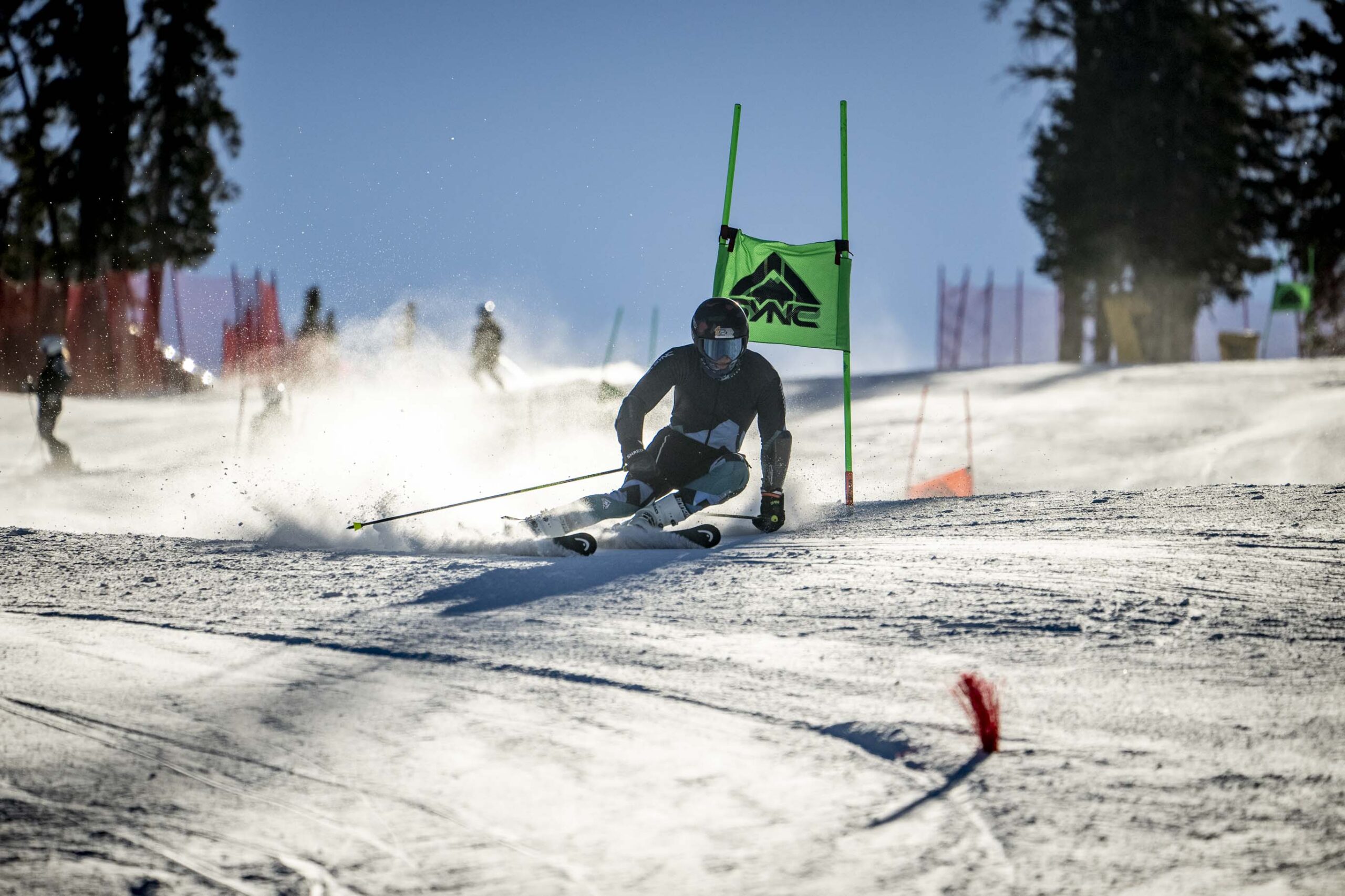
Racers who improve position in second runs usually do the opposite. They attack with abandon. Not recklessly, but decisively. They trust their line, stand on the downhill ski, and commit to speed.
Understanding this distinction is critical. Attacking doesn’t mean pinning gates. It means skiing with confidence and commitment instead of fear and caution.
Emotional Carryover From the First Run
Another major challenge of second runs is emotional carryover.
Racers rarely arrive at the second run emotionally neutral. They carry excitement from a strong first run, frustration from a mistake, disappointment from missed opportunity, or relief from surviving a difficult course.

If these emotions are not addressed, they influence second-run decision-making. Excitement can turn into rushing. Frustration can lead to forcing. Relief can lead to passivity.
Effective second-run performance requires a deliberate emotional reset.
The Reset Is Not Optional
A reset does not mean forgetting the first run. It means preventing it from controlling the second.
A complete reset has three components.
First, a physical reset. Movement helps discharge emotional energy. Walking, light jogging, shaking out the body, or dynamic stretching all help reset the nervous system.
Second, a mental release. Racers should explicitly acknowledge the first run and then let it go. This can be as simple as mentally saying, “That run is done. This is a new race.”
Third, a refocus on execution. The racer must reconnect with how they intend to ski the second run, not what they hope the result will be.
Skipping any of these steps increases the likelihood of emotional interference.
Recalibrating Aggression
Second runs require recalibrated aggression.
Racers often assume aggression means trying harder or taking more risk. In reality, aggression in ski racing is about commitment. It is about being decisive with intensity and tactics.
Every racer should define what attacking looks like for them. This might include earlier pressure, stronger line commitment, or snappy transitions. Without this definition, racers rely on emotion to guide aggression, which is unreliable under pressure.
Simplifying Focus Under Pressure
Pressure reduces mental capacity. This is why second runs demand simpler focus.
Racers should enter the second run with no more than three cues.
One tactical cue, such as line choice or terrain approach.
One physical cue, such as pressure or stance.
One mental cue, such as trust or commit.
Anything more invites overthinking.
Practical Second-Run Framework
Before the second run, racers should ask themselves three questions.
-What emotion am I carrying from the first run
-What do I need to release before I start
-What does attacking look like for me in the second run
These questions help racers reset intentionally rather than react emotionally.
Finish Line
Second runs expose mindset instantly. They reward racers who can reset, regulate, and recommit under pressure. They are not about holding on. They are about trusting what you trained and skiing with purpose when it matters most.